
Les Nobles Bêtes · Folio III · The Dodo Affair
The Dodo, the Fox & the Composer
A Recovered Folio · École des Beaux-Arts, Paris · c. 1887–1895
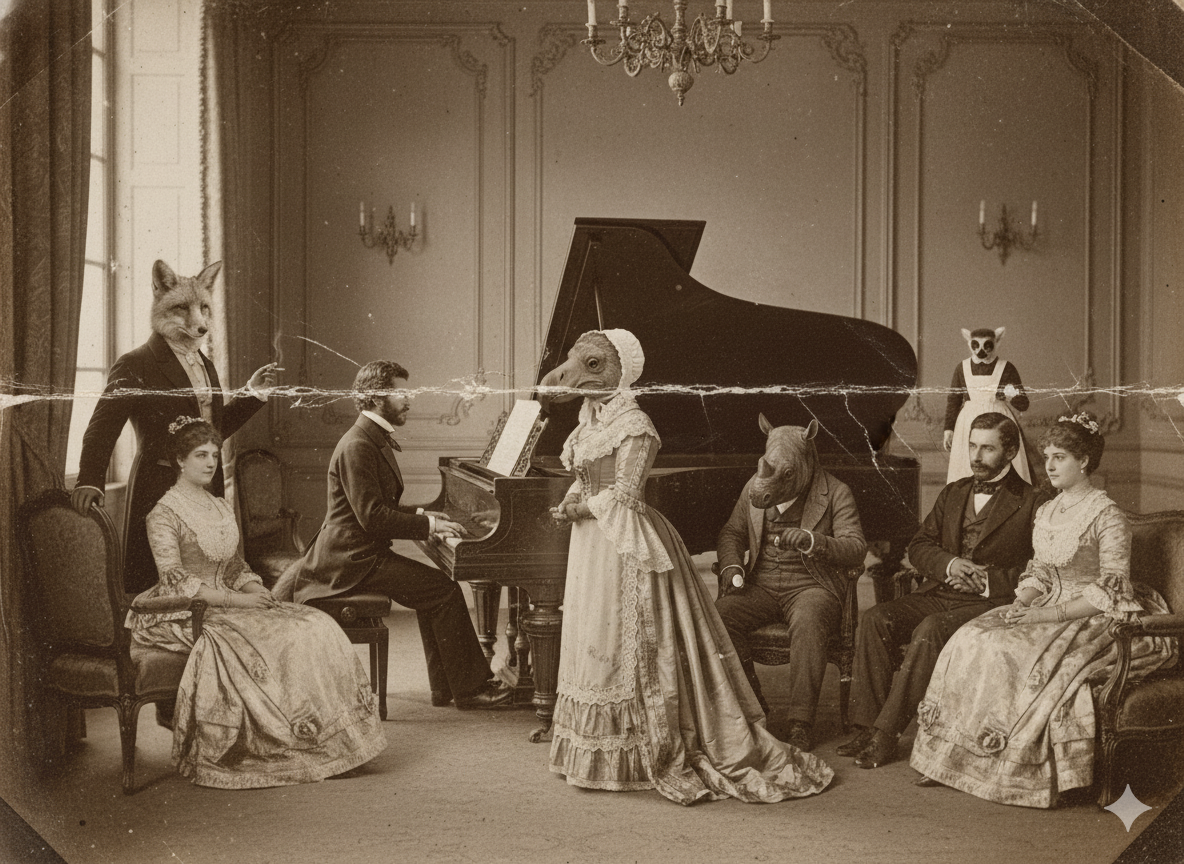
The Salon of Mme. Pelletier · Paris · c. 1892 · Attributed to Étienne de Mouffette (disputed) · Cognancy Institut des Plumes Disparues, Accession #NB-1892-07
The Dodo Affair — as it has come to be known in the Institut's internal catalogue, though the Dodo herself would have found this title both reductive and slightly rude — is the central tragedy of the early Nobles Bêtes period. It involves three figures: a fox who painted, a composer who wrote songs, and a dodo who was, by all accounts, the only one of the three who actually knew what she wanted.
She wanted to sing.
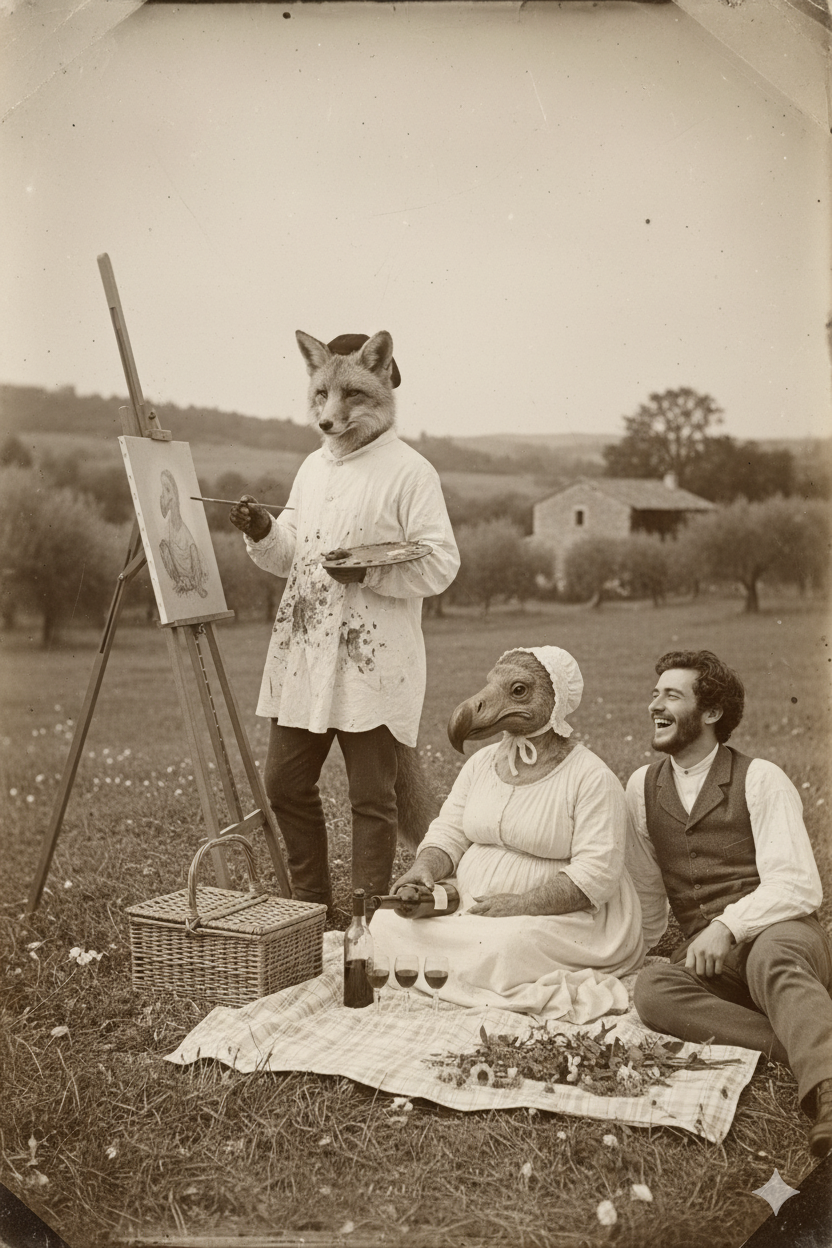
The Meadow Picnic · c. 1889 · Photograph, provenance unknown
Étienne de Mouffette stands at the easel. Fauré reclines beside the Dodo on the blanket. The fox is not looking at Fauré. He is only looking at her.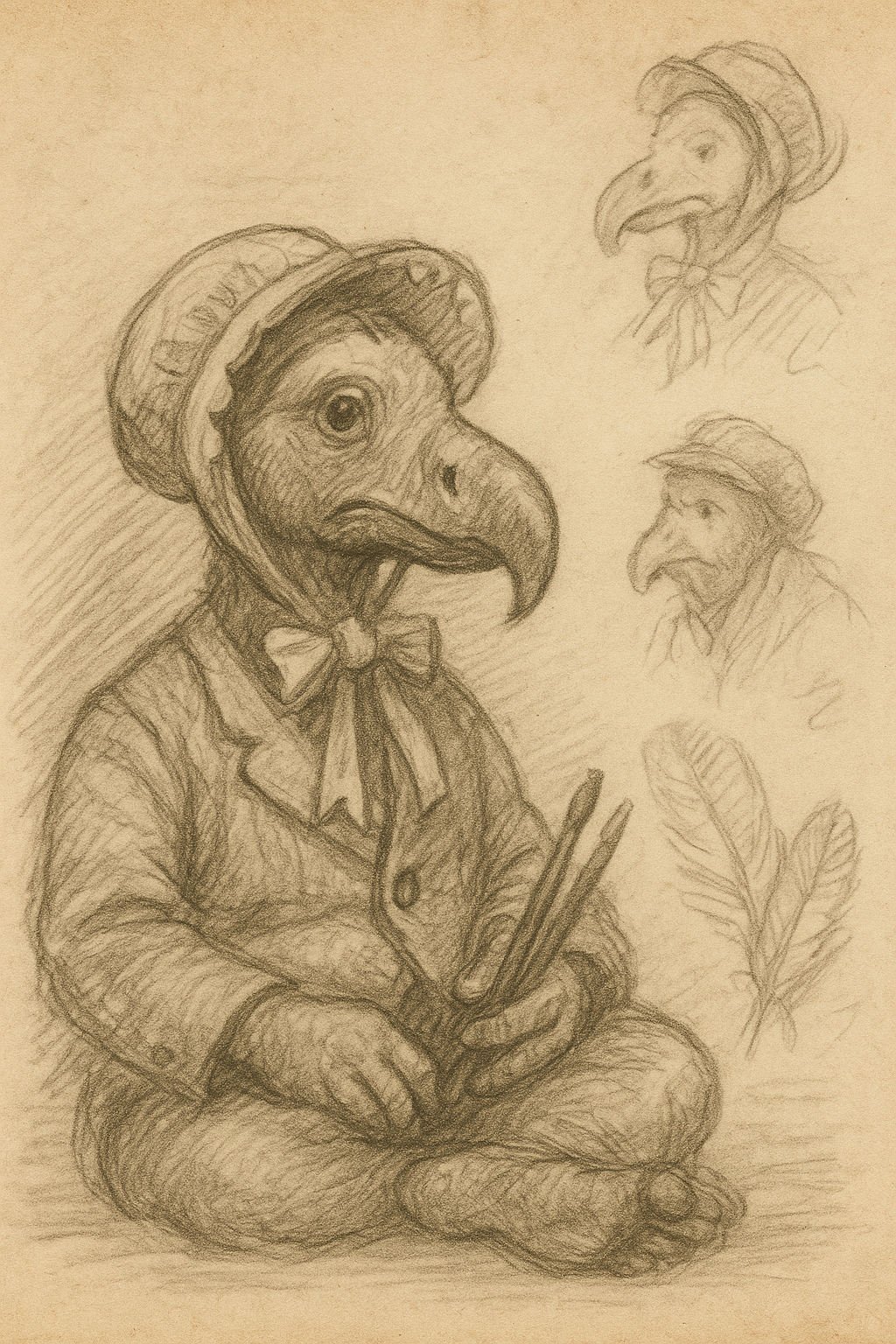
Study for "Dodo in Bonnet" · c. 1890 · Graphite on parchment · Attributed to Étienne de Mouffette
Three studies of the same subject. The bonnet. The three-quarter turn. The way she holds herself. He drew her fourteen times and named none of them.Étienne de Mouffette and the Dodo met at the École des Beaux-Arts, where Étienne was already developing the chiaroscuro style that would define his Riviera period — woodland creatures in cravats, rendered with a precision that his professors called "technically impeccable and emotionally alarming." He had been expelled once for excessive whimsy and reinstated on the condition that he confine his whimsy to the canvas. He did not confine it to the canvas.
The composer known to the Institut only as Fauré — whether this is Gabriel Fauré the actual composer, a different Fauré, or a human who attached himself to the Nobles Bêtes circle through sheer persistence, remains disputed — arrived in the same period. He was charming. He laughed easily. He sat on the blanket at the picnic while Étienne stood at the easel, and he made the Dodo laugh, and Étienne painted them both, and the fox's brushstrokes in that section of the canvas are, according to the Institut's conservation notes, "notably more forceful than elsewhere in the work."
— Dr. Mdme. Susan M., Esq., curatorial notes, Folio III
The Salon Performance · Paris · c. 1892 · The fox stands at the far left. Fauré is at the piano. The rhinoceros in the waistcoat is pretending not to notice.
Fauré wrote the art song for her. The Institut has not recovered the score — it is believed to exist in a private collection in Lyon, or possibly Bruges, or possibly nowhere, depending on which archivist you ask. What is known is that it was performed for the first time at the Salon of Mme. Pelletier in the winter of 1892, with Fauré at the piano and the Dodo singing.
Étienne was present. He stood at the edge of the room. He did not move for the duration of the performance. The lemur who served as Mme. Pelletier's footman later reported that the fox's expression was "the face of someone watching something they had already lost, and knowing it, and staying anyway."
— Étienne de Mouffette, on the painting Dodo in Bonnet, c. 1893
The painting was declared burned. It was not burned.
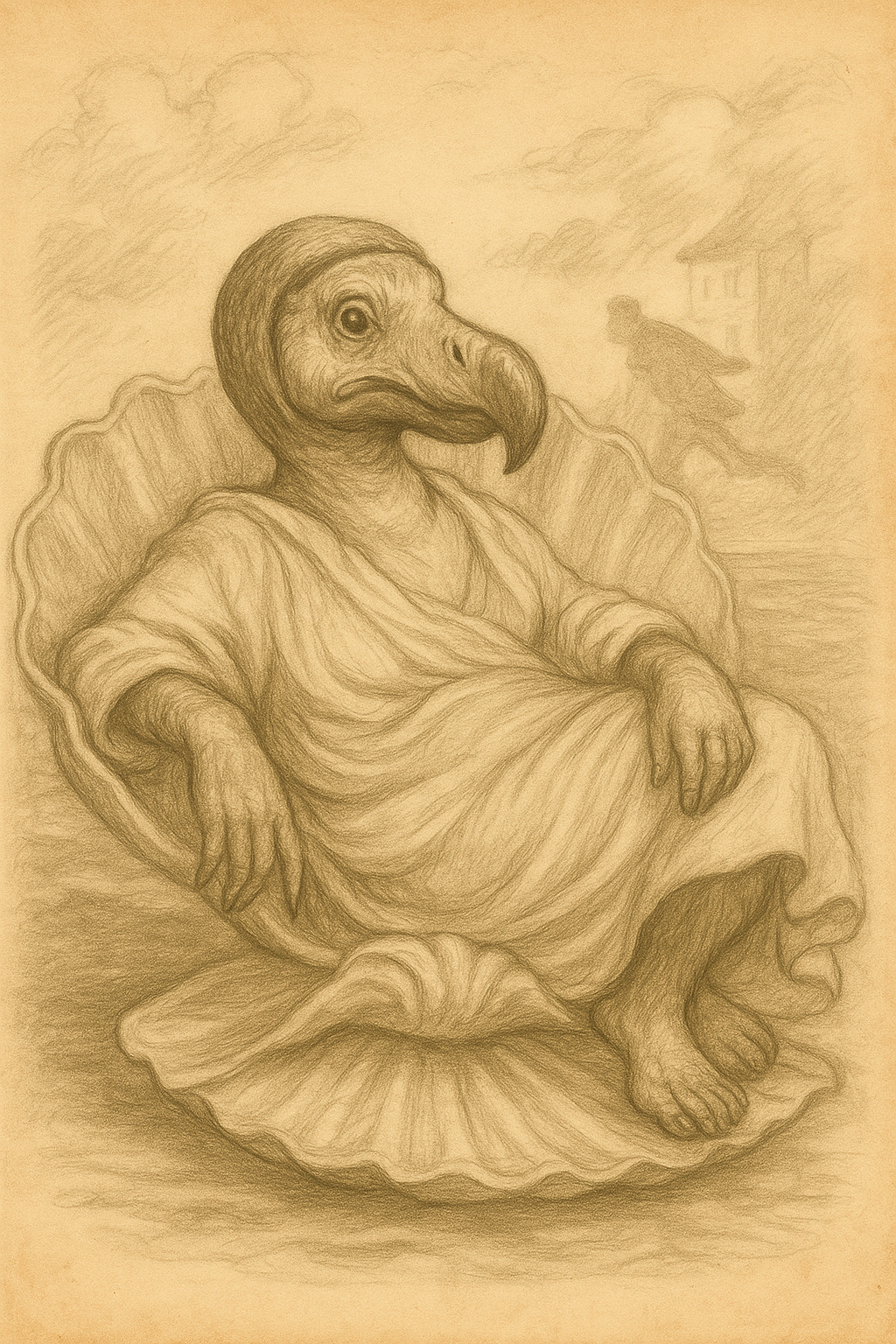
Untitled (Dodo Reclining) · c. 1894 · Graphite on parchment · Attributed to Étienne de Mouffette
The painting he said he burned. The shadow in the background is walking away. The Dodo does not watch it go.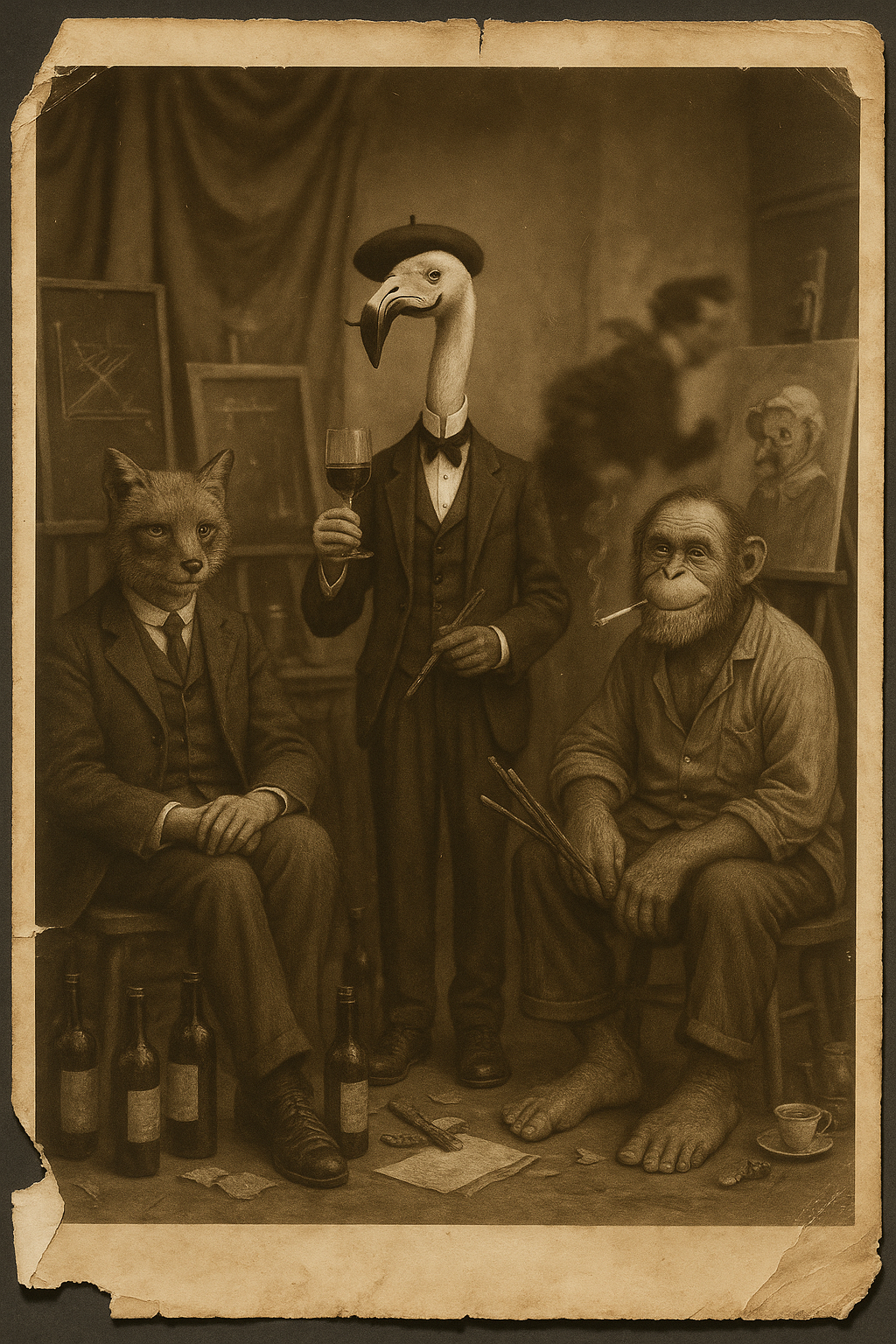
Studio Portrait · c. 1893 · The Académie period
Post-art school. The Dodo in the beret, holding a wine glass. The fox on the left. The chimp barefoot, soaked in turpentine. Luigi is not yet in the picture. He will arrive shortly.The Dodo died in 1895. The cause is not recorded in the Institut's files. Étienne de Mouffette left Paris shortly after and did not return. He was next documented in Marseille, boarding a train with a mongoose and a velvet suitcase. The mongoose has not been identified. The suitcase is believed to contain the painting.
The painting Dodo in Bonnet — declared burned, believed unburned — has never been exhibited. If it exists, it is the only work Étienne made that he never showed anyone. The Institut considers this the most important fact about him.